
Essential Features of a High-Converting Travel Agency Website
The pages, trust signals, content and technical features a travel website needs to generate qualified enquiries.
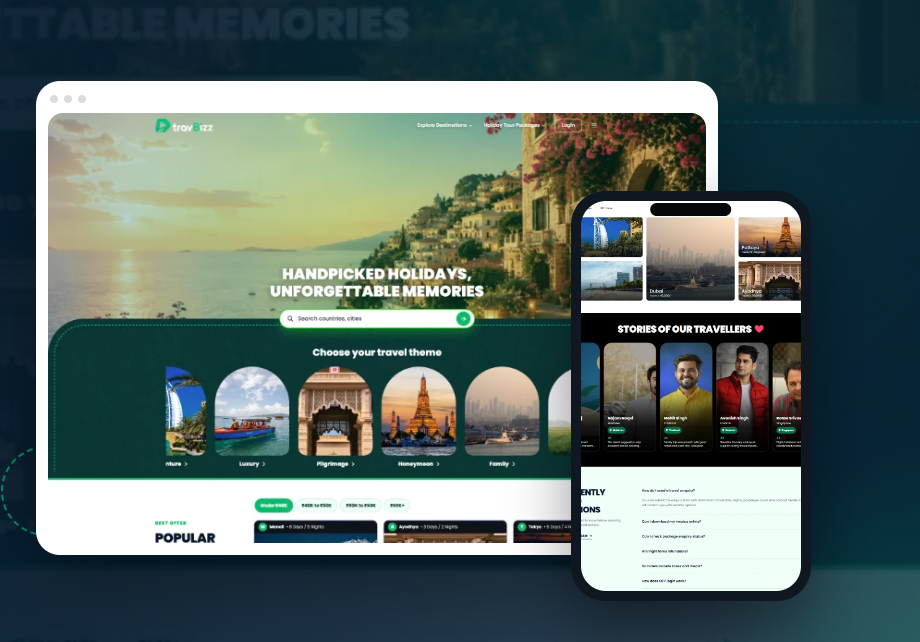
A travel website must support a business goal
A visually attractive website is useful only when visitors can understand the offer and take the next step. Decide whether the primary goal is package enquiries, consultation calls, online bookings or B2B partner acquisition.
Design navigation and calls to action around that goal instead of presenting every service with equal priority.
Pages and content that build trust
Visitors need specific information about destinations, packages, company experience and support. Generic stock content makes it difficult to differentiate the agency.
- Clear homepage value proposition
- Destination and package pages
- About and contact details
- Customer testimonials or case studies
- Privacy, terms and refund policies
- Frequently asked questions
- Visible enquiry and demo calls to action
Technical essentials
The site should load quickly, work smoothly on mobile, use HTTPS and provide clean URLs, unique titles and structured headings. Images should be compressed and forms should have clear success and error messages.
Analytics and conversion tracking are necessary to understand which pages and campaigns generate enquiries.
Connect the website to operations
Website enquiries should enter the CRM automatically with source, page and campaign data. Fast assignment and follow-up have more impact on conversion than simply adding more form fields.
For online booking models, connect reliable supplier APIs and payment workflows; for custom packages, focus on informative pages and a qualified enquiry process.
Put these ideas into practice with TravBizz
Connect your sales, itinerary, operations and customer workflows with travel technology designed for agencies.
Frequently asked questions
How many pages should a travel website have?
There is no fixed number. Start with complete core pages and create additional destination or service pages only when they provide unique, useful content.
Should every package have its own page?
Important packages benefit from dedicated URLs with detailed itinerary, pricing context, inclusions and FAQs.
What makes a travel website SEO friendly?
Clean technical setup, fast mobile experience, unique helpful content, logical internal links, descriptive titles and genuine authority signals are key factors.