How to Start an Online Travel Booking Portal
A practical roadmap covering business model, supplier APIs, technology, payments, compliance, operations and launch.
Choose the business model first
Decide whether the portal will serve direct customers, sub-agents or both. Define the products—flights, hotels, packages or selected services—and the markets you will target.
Your business model affects supplier contracts, markups, payment collection, support workflow and the type of portal required.
Arrange inventory and commercial agreements
A portal needs reliable inventory through direct supplier connections, aggregators or host agencies. Compare content, pricing, cancellation support, settlement cycles and API limits.
Do not choose technology before understanding how bookings, amendments, refunds and supplier payments will work operationally.
Build the technology stack
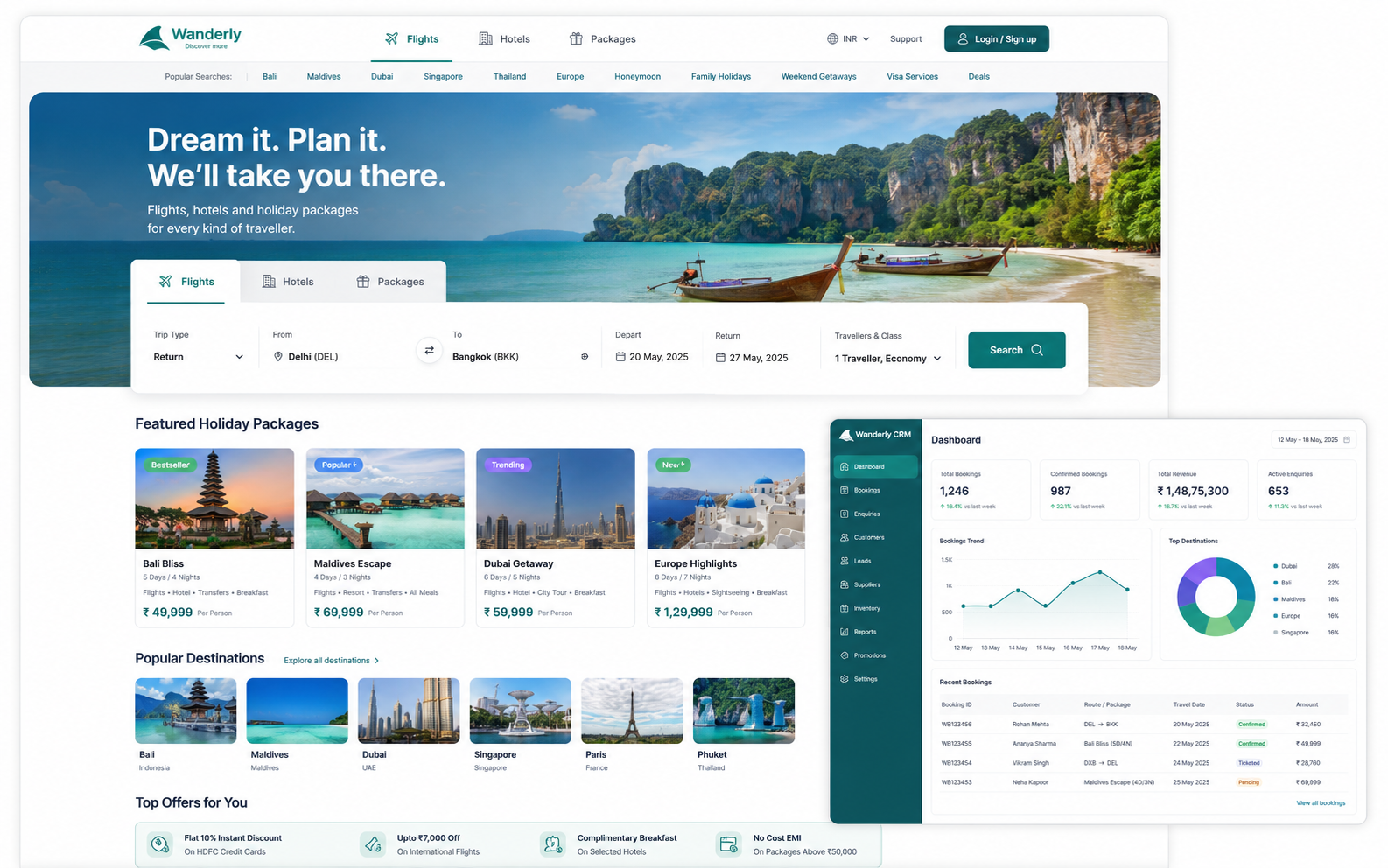
Core requirements include a responsive interface, booking engine, supplier API integration, payment gateway, admin panel, customer communication and reporting.
- Secure domain and SSL
- Search and booking workflow
- Markup and fee management
- Payment and reconciliation
- Customer account and documents
- Cancellation and support tools
- Analytics and conversion tracking
Prepare launch and support
Test successful bookings, failures, payment mismatches, duplicate requests, cancellations and mobile usability. Publish privacy, terms, refund and contact information before advertising.
Start with controlled traffic, monitor every booking closely and improve the funnel using search, checkout and support data.
Put these ideas into practice with TravBizz
Connect your sales, itinerary, operations and customer workflows with travel technology designed for agencies.
Frequently asked questions
How much does a travel portal cost?
Cost varies by modules, APIs, custom design, payment integration, hosting and source-code requirements. A detailed scope is needed for an accurate estimate.
Can a portal launch with only hotels?
Yes. Starting with one product can simplify operations and allow the business to validate demand before adding more modules.
Is a payment gateway mandatory?
It is required for online payment collection, although some B2B models may use wallet, credit or offline payment workflows.