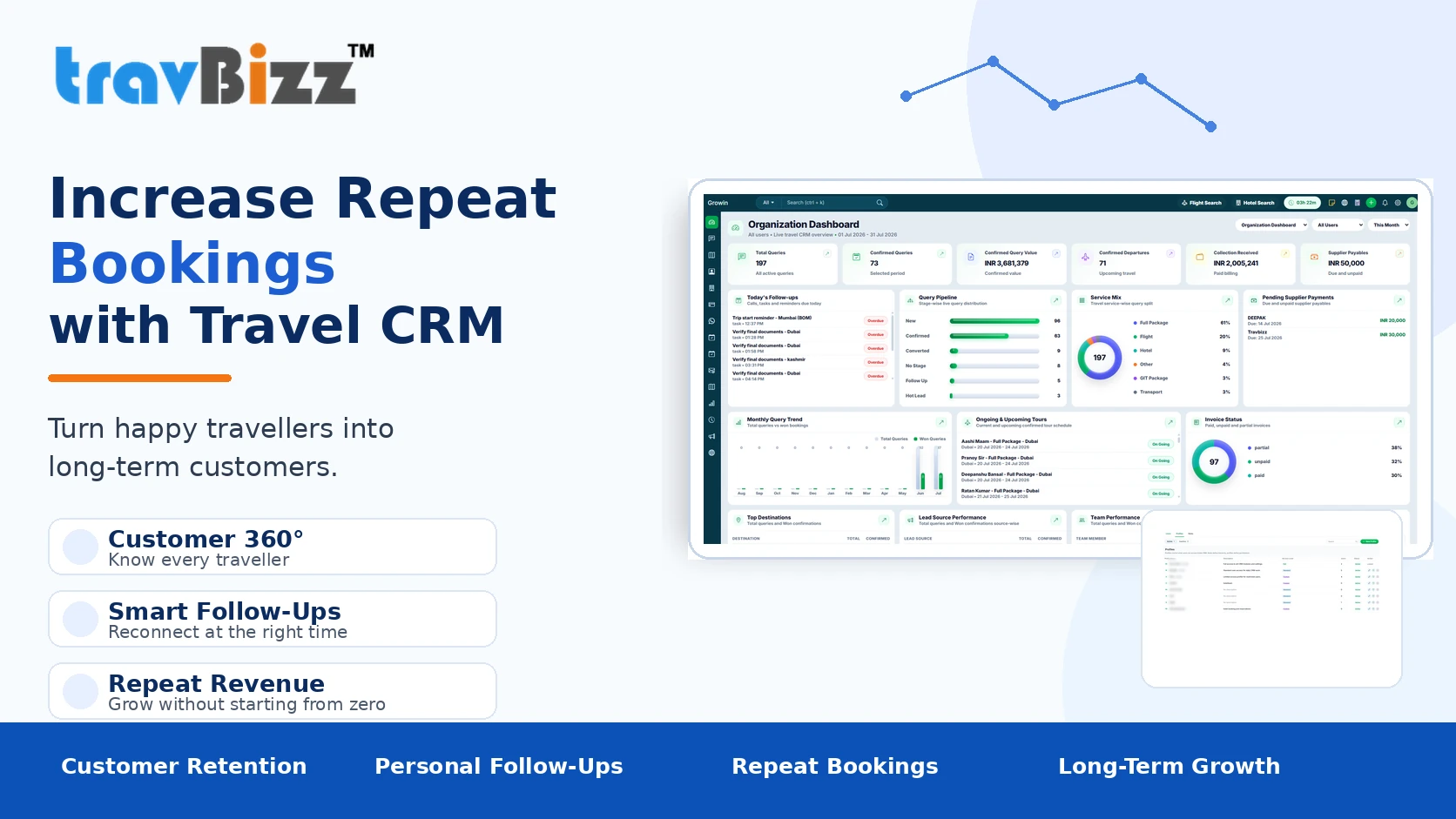
How Travel Agencies Can Increase Repeat Bookings Using CRM in 2026
Learn how travel agencies can use CRM to improve customer retention, personalise follow-ups, identify repeat-booking opportunities and build stronger long-term customer relationships.
Why repeat bookings matter more than most agencies realise
Winning a new customer takes effort: marketing spend, quick response, requirement discussions, quotation work and repeated follow-ups. Once that traveller has booked successfully, the agency already has something valuable that a new lead does not provide — trust, history and context.
A repeat customer usually needs less reassurance, understands how the agency works and may be more open to upgrades, premium services or referrals. The challenge is that many travel agencies finish a trip, close the file and move on to the next lead. A Travel CRM helps keep the relationship active after the booking is complete so past customers can become a predictable source of future business.
1. Keep one complete customer history instead of scattered records
Repeat booking starts with remembering the customer properly. A CRM should give the team one view of past enquiries, destinations, quotations, bookings, preferences, notes and important conversations. This prevents the awkward situation where a returning customer has to explain everything again.
When the salesperson can quickly see that a customer previously travelled to Dubai with family, preferred a four-star hotel and asked for airport transfers, the next conversation immediately feels more personal and efficient.
- Past destinations and travel dates
- Traveller profile and family details
- Preferred hotel or package style
- Budget range and booking value
- Special requests and service notes
- Previous follow-ups and conversations
2. Use post-trip follow-ups to keep the relationship alive
A good customer-retention process should not end when the traveller returns home. A short post-trip follow-up gives the agency a natural reason to reconnect, collect feedback and understand what the customer may want next.
The CRM can create a task after the travel date so the salesperson remembers to check in. This should feel helpful rather than promotional. A genuine service-oriented message can strengthen trust and give the agency valuable information for future offers.
3. Record preferences that make the next proposal better
Repeat customers expect the agency to know them better the second time. Small details such as preferred airlines, room category, dietary needs, travel pace, visa concerns or whether the customer likes guided tours can make the next quotation much more relevant.
A CRM turns these details into usable sales context. Instead of sending the same generic package to everyone, the salesperson can build the next conversation around what the traveller already values.
4. Create timely reminders for likely repeat-booking windows
Many repeat trips follow a pattern. Families may travel during school holidays, couples may plan annual vacations, corporate travellers may repeat routes and some customers book around birthdays, anniversaries or festive periods.
A CRM can help the agency create future reminders based on previous travel dates or known customer plans. The objective is not to send random messages every month; it is to reach out when the customer is genuinely more likely to be planning another trip.
- School holiday travel windows
- Anniversary or birthday travel
- Annual family vacations
- Seasonal destination demand
- Corporate or recurring travel
- Previously postponed plans
5. Segment past customers before sending offers
Customer retention becomes stronger when communication is relevant. A beach holiday offer should not automatically go to every past customer, and a luxury package should not be promoted to a traveller whose previous bookings were budget-focused.
CRM segmentation helps agencies create smaller, more relevant customer groups using past destinations, booking value, traveller type, lead source or service preferences. Better targeting reduces noise and improves the chance that an offer actually starts a conversation.
6. Track which customers are most likely to return
Not every past customer has the same repeat-booking potential. A traveller who has booked three times, responds quickly and refers friends is more valuable than a one-time customer who has not engaged for years.
A CRM can help sales teams identify active repeat customers, high-value clients and customers with recent engagement. This allows the agency to spend retention effort where it has the highest commercial value.
7. Make follow-up personal, not automated-looking
Automation can make retention easier, but it should not make communication feel robotic. A reminder can tell the salesperson when to contact a past customer, while the actual message should use the customer's history and current context.
For example, 'We have a new Thailand package' is generic. 'Last year you travelled to Bali with your family; if you are planning another summer break, I can shortlist similar family-friendly options' feels much more relevant. The CRM provides the context needed for this kind of personal follow-up.
8. Use service quality data to protect customer loyalty
Repeat bookings depend on experience, not only sales follow-up. If a customer had a complaint, a delayed response or an unresolved issue, sending another promotional message too soon can damage trust.
Notes, feedback and service history in the CRM help the team understand whether the relationship is ready for another sales conversation. Retention works best when customer service and sales information stay connected.
9. Build referral opportunities from happy customers
A satisfied repeat customer can create more than one booking. They may refer family, friends or colleagues, especially when the agency has delivered consistently across multiple trips.
The CRM can help record referral sources and identify customers who regularly recommend the agency. This gives the business a clearer picture of which relationships are creating additional revenue beyond the customer's own bookings.
10. Measure repeat booking performance instead of guessing
Customer retention should be measurable. If the CRM records customer history and confirmed bookings, management can track how much business is coming from returning customers and whether retention activity is improving over time.
Useful measurements include repeat booking rate, average booking value of returning customers, time between bookings and revenue from existing customers. These numbers show whether the agency is building a stronger customer base or constantly depending on new leads.
- Repeat booking rate
- Revenue from returning customers
- Average value of repeat bookings
- Time between first and second booking
- Referral-generated enquiries
- Retention performance by salesperson
How TravBizz can support repeat-booking growth
TravBizz Travel CRM helps travel agencies keep customer records, enquiry history, follow-ups and sales activity organised in one system. That makes it easier for the team to understand past customers, schedule the right next action and maintain continuity across future enquiries.
The biggest retention advantage is not sending more messages. It is remembering the customer better. When the CRM gives every salesperson the right context at the right time, repeat customers receive a more personal experience and the agency has a stronger chance of earning the next booking.
Final takeaway
A Travel CRM can help agencies turn completed trips into future opportunities by preserving customer history, supporting timely follow-ups, improving segmentation and measuring repeat-business performance.
The goal is simple: do not treat every confirmed booking as the end of a customer journey. Treat it as the beginning of a longer relationship. Agencies that consistently deliver good service and use CRM data intelligently can build more repeat bookings, referrals and predictable long-term revenue.
Put these ideas into practice with TravBizz
Connect your sales, itinerary, operations and customer workflows with travel technology designed for agencies.
Frequently asked questions
How can CRM increase repeat bookings for a travel agency?
CRM helps by keeping customer history, preferences and past bookings organised, creating follow-up reminders and helping teams contact past travellers with more relevant offers at the right time.
What is customer retention in a travel agency?
Customer retention is the ability to keep existing travellers engaged so they book again, refer others and continue using the agency instead of switching to a competitor.
Should travel agencies contact customers after a trip?
Yes. A short post-trip service follow-up can help collect feedback, strengthen the relationship and create a natural foundation for future bookings.
Can Travel CRM store customer preferences?
Yes. A travel CRM can store useful context such as destination history, traveller details, preferences, notes and previous conversations so future proposals can be more personalised.
What should travel agencies measure for repeat business?
Useful metrics include repeat booking rate, revenue from returning customers, average repeat booking value, referral enquiries and the time between customer bookings.
Is CRM useful for small travel agencies that depend on referrals?
Yes. Small agencies often benefit greatly because CRM helps them maintain personal relationships while keeping follow-ups and customer history organised as the client base grows.