CRM for Tour Operators and DMCs: A Complete Workflow Guide
How tour operators and destination management companies can connect sales, itinerary, suppliers, operations and payments.
Why tour operators need more than lead tracking
Tour operators and DMCs manage complex service combinations. A single booking may include hotels, transfers, sightseeing, guides, meals, activities, permits and special requests across several days.
The CRM should therefore connect commercial and operational information. Sales teams need package flexibility, while operations teams need confirmed service details and supplier communication.
Recommended workflow
Create the enquiry with complete passenger and travel details, then build one or more itinerary options. Cost services using supplier rates, add markups and taxes, and keep internal costs separate from the customer-facing quotation.
After confirmation, freeze the selected option and transfer it to operations. Assign suppliers, track confirmations, create vouchers and monitor customer as well as supplier payments.
- Enquiry and account management
- FIT and group itinerary planning
- Service costing and package options
- Supplier allocation and confirmations
- Voucher and document generation
- Receivables and payables tracking
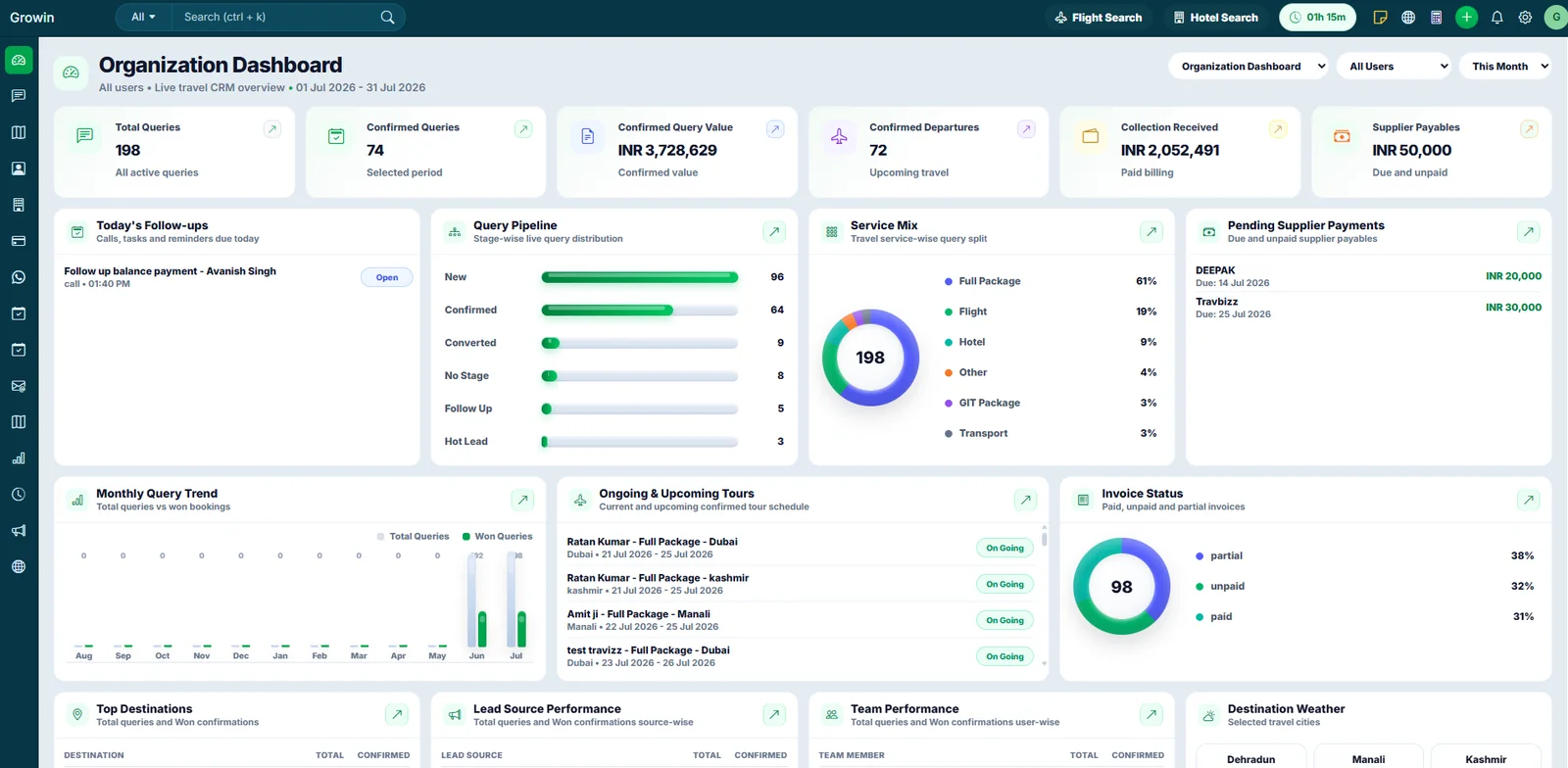
- Departure and operation dashboards
B2B account management
DMCs often serve travel agents rather than direct customers. Maintain company profiles, credit limits, negotiated rates, payment terms and contact persons. Reports should separate agency production from end-customer details.
Role-based access is important when different branches or destination teams serve the same B2B network.
Operational visibility
Upcoming arrival, ongoing tour and pending service dashboards reduce last-minute surprises. The system should highlight unconfirmed suppliers, overdue payments, missing documents and pending vouchers before departure.
Connected data also improves profitability reporting because sales value, supplier cost and additional tour expenses remain linked to the same booking.
Put these ideas into practice with TravBizz
Connect your sales, itinerary, operations and customer workflows with travel technology designed for agencies.
Frequently asked questions
What is the difference between tour operator CRM and a standard CRM?
Tour operator CRM includes travel-specific itinerary, service, supplier, costing, voucher and operational workflows in addition to sales follow-ups.
Can DMCs manage B2B agents in the same system?
Yes, a suitable system can maintain company accounts, agent contacts, quotations, payment terms and production reports.
Does CRM support group tours?
A travel-focused CRM may support group departures, seat allocation, rooming details and fixed-date operations, depending on the product configuration.